Children’s Allergy Blood Test Home Kit Details
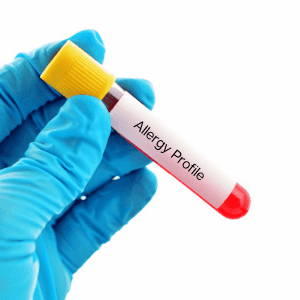
Children’s Allergy Blood Test Home Kit. Sampling can be done yourself through finger pricking.
29-in-1 includes:
- Immunoglobulin E (IgE), which indicates antibody levels.
- Cat
- Dog
- Horse
- Codfish
- Rice
- Birch
- Soybean
- Peanut
- Hazelnut
- Mugwort
- Carrot
- Potato
- Apple
- Egg white
- Egg yolk
- Cow’s milk
- Timothy grass
- Cultivated rye
- Wheat flour
- Alternaria alternata
- Aspergillus fumigatus
- Cladosporium herbarum
- Milk – nBos d6 BSA
- nBos d8 Casein
- nBos d5 Beta-lactoglobulin
- nBos d4 Alpha-lactalbumin
- Dermatophagoides farinae
- Dermatophagoides pteronyssinus
Child allergies are caused by the body not accepting an animal, plant, food product. A harmful substance here, which is commonly harmless to others, causes an overloaded production of antibodies such as IgE.
Severe cough, flowing mucus, or skin irritation may tell you that your child has an allergic reaction.
Instructions for examination
The child’s sample should be taken in the morning and before taking medication.
For the the best samples, we suggest:
- Staying hydrated before taking a sample.
- Taking a warm shower to improve blood flow.
- Doing light exercise.
- Shaking the test tube gently instead of violently.
- Avoiding a hard squeeze on the finger.
- Not leaving the sample to sit for more than a day to prevent clotting.
Why get a checkup here?
- Direct laboratory prices and support.
- Fast results and prescriptions for children.
- CE-certified sensitive PCR laboratory equipment for accurate tests.
- Pre-paid Royal Mail delivery.
- MHRA-registered IVD devices.
- WhatsApp support during business hours.
What do I have to do for the evaluation?
To get your child’s samples analysed and receive results:
- Access the link provided in the written instructions on the kit.
- Collect test samples according to instructions.
- Put into the provided additional box.
- Locate the nearest drop box through the Royal Mail app.
- Place the box into the drop box to be delivered and analysed.
- Receive your results in 1 week.

Order your Children's kit and collect your sample at home.
Drop off the sample in the Royal Mail Red Street Box. Use the Track 24/48 return label to the laboratory.
Receive your results through email or by opening your dashboard on our site.
How long do I need to wait for my results?
The typical turnaround time for kids is 1 week. Do note that while we aim to give you results as quickly as possible, the exact result processing time may vary. We are committed to following strict guidelines to ensure quick and accurate results, including staff training, audits, logging, and quality control.
The optimal approach to is to guarantee that the sample is sent at the appropriate time. Avoid allowing it to remain still for a period of 1-2 days. Additionally, in order to mitigate the effects of coagulation, please submit prior to the cut-off time.
We suggest taking your sample from Monday to Thursday to avoid delivery delays from our laboratory.
A story about living with a child’s condition. Is it a hard concept?
Blood exams for children and pets, when living together is good for their health.
We hear a lot about diseases and pollution. Fear of putting neonates in close touch with dogs. There is no doubt that dogs, cats, and other animals carry microbes. The good news is that most of them are not genetically compatible with humans, and some of them can have consequences that are not expected. But one thing is for sure: “Living with animals from a young age can make the immune system stronger and lower the risk.”
This is true.
We invited Professor Mario Di Gioacchino, president of the Italian Child Society of Allergology, Asthma, and Clinical Immunology, to help us understand the current scientific study on the matter.
At the latest European Congress of Clinical Microbiology and Infectious Diseases in Copenhagen, a study was presented that said dogs and cats could pass on drug-resistant germs to us humans, which could make our antibiotic treatments less effective. A type of shield, this time not a good one, was detected in a number of people who were in the hospital because drugs weren’t working against an illness.
A study from Japan.
Published in Plos, it shows that pets are great for the immune system. In fact, kids born into homes with pets who were already in intimate touch with them during pregnancy have a lower chance of getting food allergies. Dogs seem to make difficulties with eggs, milk, and nuts less common, while cats seem to make problems with eggs, wheat, and soy more common. Hamsters, on the other hand, seem to make nut allergies worse.
Professor, how can dogs and cats preserve our food like this?
To begin with, you should realize that kids are more likely than adults to get better from a food allergy. This is because their body is more likely to develop a tolerance. At the intestinal level, we have a complex microbiota that has more or less regulatory T cells that shut down the immune system and stop it from working. This process is easier for kids because their immune systems are still growing.
Recent research.
And more have revealed that, contrary to what was thought, early weaning even in the children of people with allergies is more beneficial exactly because it minimizes the likelihood of acquiring hypersensitivity. The Japanese study was able to see this kind of protection in a situation where people were exposed to it early on, but not the cause and effect. This demonstrates that due to the early onset of immunological tolerance, likely occurring during pregnancy, exposure to dogs and cats can confer epidemiological advantages. of bacteria, which makes us more tolerant to things like eggs and milk.”
What else can we say about allergies to fur from cats and dogs?
The theory is the same: merely being around dog and cat antigens early on helps us build resistance, so we don’t get one. If you have an atopic child, you do not need to keep a dog or cat away from home. In fact, you should do the opposite: only by coming into contact with the proteins produced by the sebaceous and salivary glands – these are the real allergens to which we react, not the animal’s hair – will we reduce the risk of developing allergies. On the other side, if you keep kids under a glass bell, their immune systems won’t work as well and they’ll be more likely to get allergies.
Why are more and more kids getting new conditions?
By 2035, it is anticipated that half of Italians will have at least one allergy. There has been a significant rise in the last 20 years, and we are the only ones to blame. Environmental pollution is definitely an issue because many chemicals are immuno regulators that can make us intolerant and polarize us. The other issue is the misuse of sanitizers. We don’t live in close contact with nature anymore; instead, we live in very clean and sterile homes. This has made us less likely to be exposed to things that used to make our immune systems stronger, which has made us more likely to get sick.
What else can you tell us about antibiotic resistance?
“Having a pet changes the bacteria in our intestines, which is what makes up our microbiota.” So, this can have good benefits, like making people less likely to suffer food allergies, but it can also have bad impacts, like making drugs less effective. The risk is minor, but animals can also carry germs that are resistant to several drugs, just like we can. If our microbiota weren’t already resistant, taking an antibiotic would kill it every time, but thankfully this isn’t the case. Sadly, there is no way to effectively stop this from happening, as you can always come into contact with bacteria that are resistant to antibiotics, even if you don’t have one.
But any warm-blooded animal could cause a reaction in a person. There aren’t any breeds that are less likely to cause allergies than others. In reality, horses, cows, and pigs can all carry allergens. Just riding or being near a horse can make people with allergies react.
Proteins that can cause allergies in kids can lurk in fur, flakes of dead skin, urine, and saliva.
You can try to do the following to lower the number of allergens in your home:
- Put a HEPA filter in the house and keep theml out of the bedrooms.
- Don’t touch the animal and wash your hands when you do.
- Cats should be bathed once a week, and dogs should be bathed twice a week.
This might be especially hard for kids who can’t do things at their friends’ houses. Your allergist can help you figure out the best way to treat this. They can also tell you if you should take medicine before being around pets and what to do after being around them.
Shipping and Return Policies
Appointment:
Missed appointments or cancellations less than 24 hours prior are not entitled to refunds. Rescheduling is possible but not guaranteed. Please contact the customer service prior to the appointment time to discuss cost and availability options.
Shipping & Return:
We have a 14-day return policy, which means you have 14 days after receiving your item to request a return.
To Qualify for any return, the product must be in the same condition as when you received it. Not used, not opened, unworn, in its original packaging. You will also need to send it to us with the receipt or proof of purchase.
Please return to: Medicines by MailBox, 89 Falcon Rd, London. SW11 2PF
You can read our full return policy here:
https://medicinesbymailbox.co.uk/return-policy/
We offer next day delivery; however courier delivery times are out of our control. We are unable to offer refunds for any late deliveries. But you will receive courier tracking information once your order has been dispatched. And orders placed by 1pm are dispatched on the same day.
Shipping & Return:
We offer next-day delivery for the Children’s product. However, please also note that the courier delivery times are out of our control and late deliveries are NOT REFUNDABLE.
Orders which are placed by 1 p.m are dispatched on the same business day.
We provide a 14-day return policy, meaning that you will have 14 days (2 weeks) after receiving your item to request a return.
To qualify for a return, please note that the product must be unused, unworn, and in original condition similar to when you had received it.
Return Address: Medicines Online, 89 Falcon Rd, London. SW11 2PF.
https://ascotpharmacy.co.uk/return-policy/
Principle IVD Regulatory Certification
-
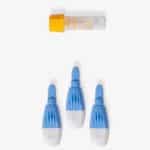
MHRA Registration Number: 10271 – Unistik Lancet
-
MHRA Registration Number: 9489 – BD Microtainer Tube















 Mugwort










Tessa W. –
The test kit was reliable, though I found the process a bit complicated at first.
Cynthia –
I had some doubts about my result, but medicines online were very kind in clarifying everything and helping me. They are amazing
Bianca –
I bought it for my son and I was afraid of not knowing how to do it, but the information is very clear and medicines online was very helpful with all the doubts I had. Great service.
Daryn CLARKe –
I am a regular customer of medicines online and both outgoing packages and incoming results are always very timely. It just works. After an ordering issue today that was cleared up in a matter of hours and to my complete satisfaction, the action will ensure I stay a regular customer necessitated by my condition. Medicines Online 🏆
Tom Booth –
The service was excellent, however Iwas tempted to give 4 stars as I had a question about the Cholesterol results which I phoned up about and struggled to get a satisfactory answer, but the company rang me back as they realised I was not entirely happy and gave me first class advice regarding my question. I would certainly use this company in future